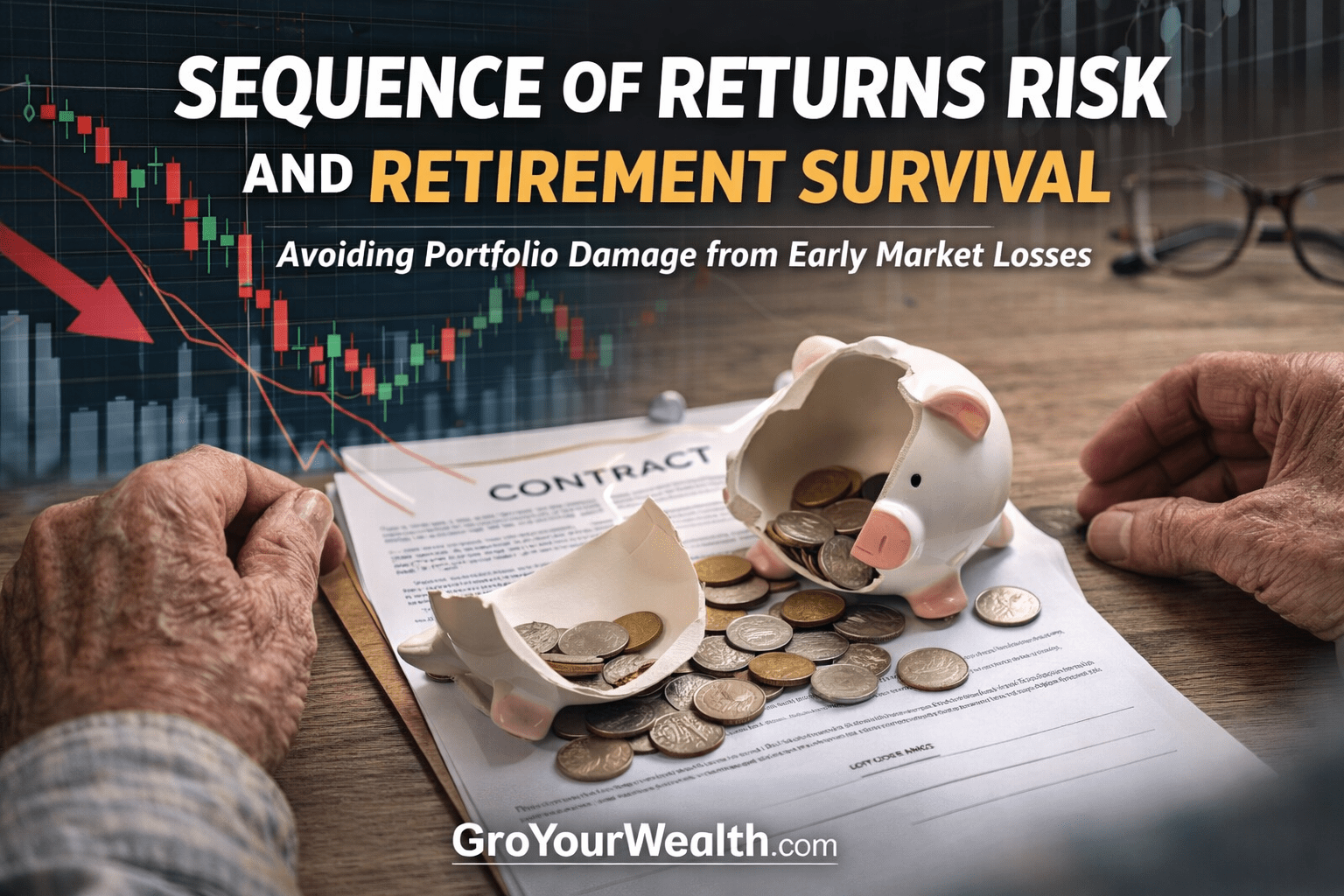
Most investors fear market crashes.
But retirees face something more dangerous:
A market crash early in retirement.
This is called sequence of returns risk.
And it can permanently damage retirement income.
What Is Sequence of Returns Risk?
Sequence risk refers to the order in which investment returns occur.
Two investors can:
- Earn the same average return
- Over the same period
- Yet end up with drastically different outcomes
If poor returns happen early in retirement while withdrawals are happening, the portfolio may never recover.
Why Early Losses Are So Dangerous
When you withdraw during a downturn:
- You sell investments at lower prices
- You reduce the capital base
- Future gains compound on a smaller amount
This creates permanent portfolio damage.
This risk becomes even more serious when combined with Longevity Risk Explained: How Living Longer Impacts Retirement Income and Financial Security.
Real Example
Investor A:
- Strong returns first 5 years
- Weak returns later
Investor B:
- Weak returns first 5 years
- Strong returns later
Same average return.
Completely different retirement outcomes.
Sequence matters more than averages.
How to Protect Against Sequence Risk
1. Maintain a Cash Buffer
Hold 1–3 years of expenses in cash or low-volatility assets.
This allows withdrawals without selling stocks during downturns.
2. Flexible Withdrawal Strategy
Instead of fixed withdrawals, adjust spending based on market performance.
This improves long-term sustainability.
3. Diversified Asset Allocation
Balanced portfolios reduce volatility exposure.
See:
Portfolio Drawdown Control Strategies That Protect Long-Term Investment Growth.
4. Delayed Retirement Option
Even part-time income in early retirement significantly reduces pressure on investments.
5. Dynamic Asset Rebalancing
Managing allocation during retirement is critical.
Related:
Volatility Management Strategies That Stabilize Long-Term Investment Returns.
Government Perspective on Sustainable Withdrawals
The U.S. Social Security Administration’s official retirement planning guidance emphasizes evaluating longevity, withdrawal timing, and income sustainability when planning retirement. You can review their official retirement overview here:
Ignoring sequence risk increases the chance of outliving assets.
How Sequence Risk Connects to Withdrawal Rates
The traditional 4% rule assumes average returns.
But if the first decade performs poorly, even 4% may be too high.
This is why modern retirement planning focuses on:
- Dynamic spending
- Guardrail strategies
- Cash allocation buffers
Final Takeaway
Average returns do not guarantee retirement success.
The order of returns matters.
Protect against:
- Early downturn withdrawals
- Overly rigid spending
- Excessive equity exposure
Manage sequence risk early —
and your retirement portfolio has a far greater chance of lasting decades