Most investors focus on average returns.
But retirees face a different danger entirely.
It’s called sequence of returns risk — and it can quietly destroy retirement income even when long-term average returns look perfectly fine.
If you are building wealth for retirement or already withdrawing from your portfolio, understanding this concept is not optional. It is essential.
What Is Sequence of Returns Risk?
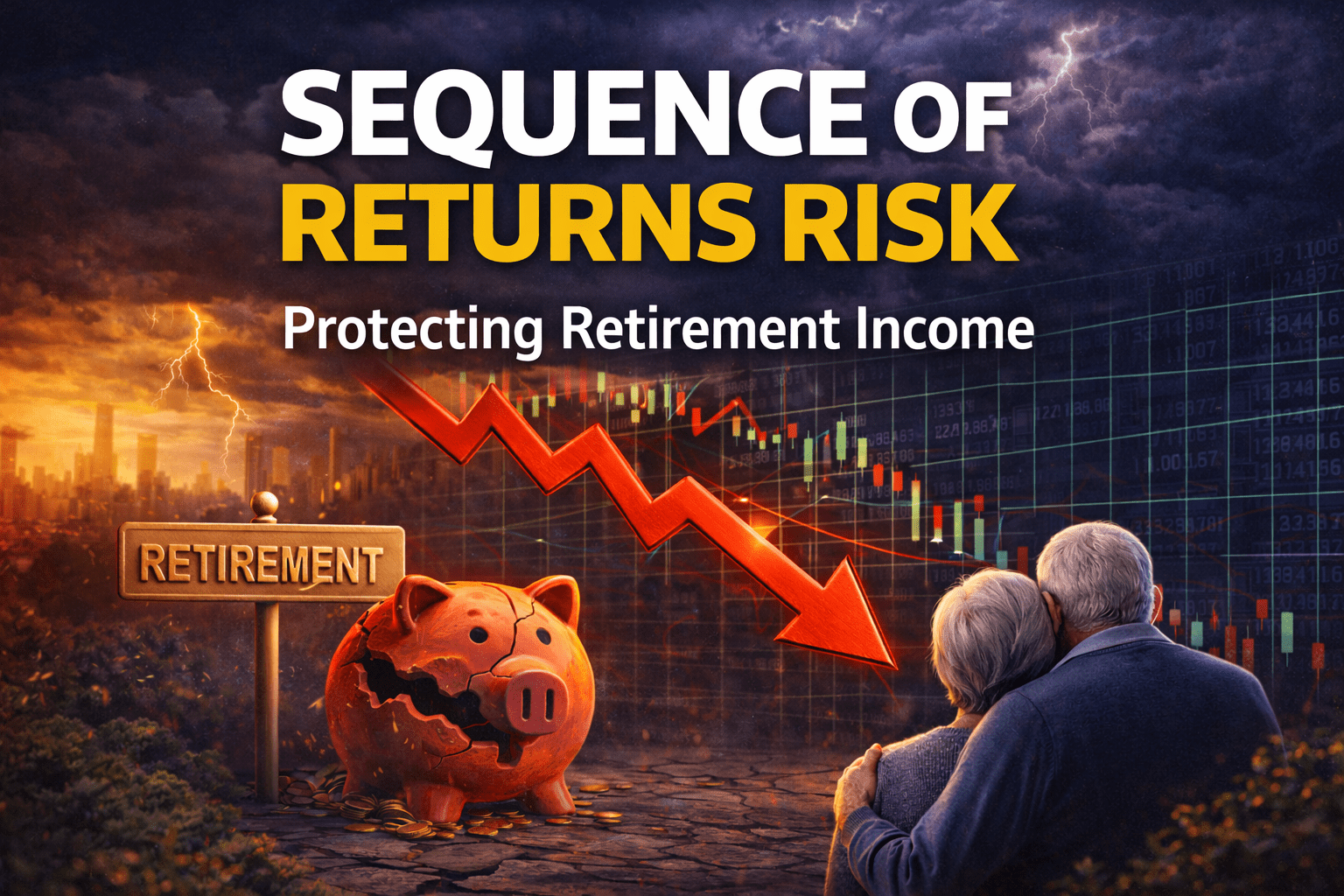
Sequence of returns risk refers to the danger that poor market returns occur early in retirement, when withdrawals begin.
Two investors can earn the exact same average return over 20 years.
But if one experiences losses in the first few years while withdrawing income, their portfolio can deplete dramatically faster.
The order of returns matters more than the average.
That is the core principle.
Why This Risk Only Matters During Withdrawals
During the accumulation phase, market declines are often beneficial because you are buying more shares at lower prices.
During retirement, the opposite is true.
When you withdraw from a declining portfolio:
- You sell more shares at lower prices
- You reduce the base that future growth compounds on
- Recovery becomes mathematically harder
This creates a permanent impact.
The portfolio may never fully recover, even if markets rebound strongly later.
This aligns with principles discussed in volatility management strategies that stabilize long-term investment returns.
A Simple Illustration
Imagine two retirees with $1,000,000 portfolios.
Both average 7% annual returns over 20 years.
Retiree A experiences positive returns early, negative later. Retiree B experiences negative returns early, positive later.
Retiree B is at significantly higher risk of running out of money.
Why?
Because early losses combined with withdrawals shrink the capital base permanently.
Compounding works on a smaller foundation.
The Mathematics Behind the Damage
When a portfolio falls 25%, it must gain 33% just to break even.
If withdrawals continue during that decline, the recovery requirement becomes even larger.
This creates what professionals call:
- Portfolio drawdown amplification
- Withdrawal stress
- Compounding impairment
Sequence risk is not about volatility alone. It is about volatility combined with withdrawals.
A deeper explanation of portfolio risk structure can be found in investment risk management strategies every long-term investor must know.
Who Is Most Exposed?
Sequence of returns risk is especially dangerous for:
- New retirees (first 5–10 years)
- Early retirement planners
- FIRE movement investors
- Anyone relying heavily on portfolio withdrawals
The first decade of retirement is often called the “fragile decade.”
Early damage during this period can permanently reduce retirement sustainability.
This risk interacts closely with longevity risk explained and how it impacts retirement income.
7 Proven Strategies to Reduce Sequence Risk
1. Maintain a Cash Buffer (2–3 Years of Expenses)
Holding short-term cash allows you to avoid selling equities during market crashes.
This gives your portfolio time to recover.
2. Use a Bucket Strategy
Divide assets into:
- Short-term spending bucket (cash & short bonds)
- Medium-term stability bucket
- Long-term growth bucket (equities)
This structure reduces forced selling during downturns.
3. Lower Equity Exposure Near Retirement
Gradually reducing risk before retirement can reduce early volatility impact.
However, too little equity increases longevity risk — balance is critical.
4. Flexible Withdrawal Strategy
Instead of fixed withdrawals, adjust spending based on market performance.
In down years:
- Reduce discretionary spending
- Avoid inflation adjustments temporarily
Flexibility dramatically improves sustainability.
5. Guardrails Approach
Set upper and lower portfolio thresholds.
If portfolio falls below a defined level:
- Cut withdrawals by a set percentage
If portfolio rises significantly:
- Increase withdrawals modestly
This dynamic adjustment protects longevity.
6. Include Diversified Income Sources
Diversification across asset classes reduces concentrated risk.
Consider:
- Bonds
- Dividend stocks
- Real assets
- Global equity exposure
Research from Vanguard and Morningstar consistently highlights diversification as a primary retirement risk management tool.
Global allocation approaches are also supported by long-term market data from S&P Global.
7. Delay Retirement (If Possible)
Even working one or two additional years:
- Reduces withdrawal years
- Increases portfolio size
- Improves pension or Social Security outcomes
Time is one of the most powerful risk mitigators.
Safe Withdrawal Rates and Sequence Risk
The traditional 4% rule was designed to withstand severe historical market sequences.
But no withdrawal rate is universally safe.
Market valuations, inflation, and longevity expectations matter.
Conservative investors may consider:
- 3%–3.5% starting withdrawal
- Flexible adjustment model
- Spending guardrails
The key is sustainability, not maximum income.
The Psychological Side of Sequence Risk
Early retirement losses can create panic.
Emotional decisions such as:
- Moving entirely to cash
- Abandoning long-term strategy
- Selling at market bottoms
Often cause more damage than the downturn itself.
Behavioral responses during downturns are explained further in market psychology explained how investor emotions control market outcomes.
Discipline and structure are essential.
Sequence Risk vs Longevity Risk
These two risks often compete:
- Too much equity increases sequence risk
- Too little equity increases longevity risk
The goal is balance.
A well-designed retirement portfolio manages both.
Key Takeaways
Sequence of returns risk is not about average returns. It is about timing.
Early losses during retirement withdrawals can permanently impair portfolio sustainability.
Protection strategies include:
- Cash reserves
- Flexible withdrawals
- Asset diversification
- Risk management design
Retirement planning is not just about growth. It is about survival and sustainability.
Final Thoughts
If you are within 10 years of retirement, sequence risk should already be part of your strategy.
If you are early in your investing journey, understanding this concept now helps you design smarter withdrawal systems later.
Wealth building is about accumulation.
Retirement success is about risk control.
Both require intentional structure.
Related Posts: