
Market uncertainty is one of the biggest reasons people avoid investing.
Economic slowdowns, inflation, geopolitical tensions, and sudden crashes can make financial markets feel unpredictable and risky.
However, history shows a powerful truth:
Long-term disciplined investors consistently build wealth — even during uncertain markets.
The key is not predicting the market.
The key is using proven long-term investing strategies that reduce risk and allow steady compounding over time.
This guide explains the most reliable global strategies used by successful investors to grow wealth through every market cycle.
Why Long-Term Investing Works Even in Uncertain Markets
Short-term market movements are unpredictable.
Prices react to news, emotions, and speculation.
But long-term investing benefits from:
- Economic growth over decades
- Corporate earnings expansion
- Compounding returns
- Recovery after downturns
Historically, global stock markets have trended upward over long periods despite recessions and crises.
This is why patient investors often outperform frequent traders.
For deeper understanding of risk reduction through diversification, read:
Asset Allocation Strategies That Reduce Risk and Grow Wealth Long Term.
Strategy 1: Focus on Asset Allocation First
Asset allocation is the foundation of long-term investing.
It means dividing investments across:
- Stocks
- Bonds
- Cash or equivalents
- Alternative assets
Research shows asset allocation explains most portfolio performance, more than stock picking or timing.
Example balanced allocation
- 60% global equities
- 30% bonds
- 10% cash/alternatives
This structure:
- Reduces volatility
- Protects during downturns
- Maintains long-term growth potential
Strategy 2: Diversify Across Countries and Sectors
Investing in only one country or industry increases risk.
Global diversification spreads investments across:
- Developed markets
- Emerging economies
- Multiple industries
- Different currencies
Benefits include:
- Lower impact from regional crises
- Exposure to global growth
- More stable long-term returns
Many long-term investors use broad global index funds for this reason.
For foundational passive-income thinking, see:
Passive Income Streams That Remain Reliable During Economic Uncertainty.
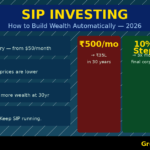
Strategy 3: Invest Consistently Using Dollar-Cost Averaging
Trying to time the market rarely works.
Instead, successful investors use dollar-cost averaging (DCA):
- Invest a fixed amount regularly
- Buy more shares when prices fall
- Buy fewer when prices rise
Over time, this:
- Reduces emotional decisions
- Lowers average purchase cost
- Builds disciplined investing habits
Consistency matters more than timing.
Strategy 4: Reinvest Returns for Compounding Growth
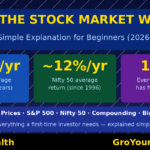
Compounding is the most powerful force in long-term investing.
When dividends and gains are reinvested:
- Earnings generate new earnings
- Growth accelerates over decades
- Small investments become large wealth
Even modest annual returns can create significant wealth with enough time.
This is why starting early matters more than investing large amounts later.
This demonstrates the long-term power of compound interest in building sustainable wealth over decades.
Strategy 5: Control Risk, Not Just Returns
High returns mean little if risk is unmanaged.
Long-term investors focus on:
- Portfolio diversification
- Stable asset allocation
- Emergency funds
- Insurance protection
Financial stability outside investments is equally important.
Learn how protection planning supports investing:
Term vs Whole Life Insurance: Which Builds Better Long-Term Security.
Strategy 6: Avoid Emotional Investing Decisions
Market crashes trigger fear.
Bull markets create greed.
Both emotions damage long-term returns.
Common mistakes include:
- Selling during downturns
- Buying during hype
- Following news headlines
- Trading too frequently
Disciplined investors instead:
- Follow a fixed plan
- Rebalance periodically
- Ignore short-term noise
Emotional control is a major wealth advantage.
Strategy 7: Maintain a Long Time Horizon
Time reduces investment risk.
Over short periods:
- Markets fluctuate heavily.
Over long periods:
- Growth trends dominate.
Investors with 10–20+ year horizons historically experience:
- Higher probability of positive returns
- Reduced volatility impact
- Stronger compounding effects
This is why retirement investing should begin as early as possible.
Strategy 8: Keep Investment Costs Low
Fees silently reduce long-term wealth.
High-cost funds and frequent trading can:
- Reduce annual returns
- Slow compounding
- Increase risk without benefit
Low-cost index investing helps:
- Preserve returns
- Improve long-term outcomes
- Simplify portfolio management
Cost control is one of the easiest ways to increase wealth.
Strategy 9: Align Investing With Personal Financial Planning
Investing works best within a complete financial plan.
Key foundations include:
- Emergency savings
- Debt management
- Insurance protection
- Retirement goals
If these areas are weak, investing becomes stressful and unstable.
Start with strong fundamentals explained here:
Emergency Funds Explained: How Much You Really Need and Where to Keep It.
Strategy 10: Stay Invested Through Market Cycles
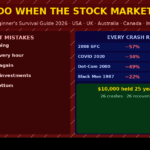
One of the biggest long-term mistakes is leaving the market during crises.
Missing only a few strong recovery days can significantly reduce total returns.
Successful investors:
- Stay invested
- Continue regular contributions
- View downturns as opportunities
Patience often outperforms prediction.
The Real Secret to Long-Term Wealth
All powerful investing strategies share three simple principles:
1. Consistency
Regular investing beats perfect timing.
2. Diversification
Spreading risk protects long-term growth.
3. Patience
Time and compounding create real wealth.
There is no shortcut —
but there is a reliable path.
To strengthen long-term investing knowledge, exploring top beginner finance books to read can provide timeless principles that complement disciplined portfolio strategies.
Final Thoughts
Market uncertainty is permanent.
But long-term wealth building is still achievable.
By focusing on:
- Asset allocation
- Global diversification
- Consistent investing
- Emotional discipline
- Long-term patience
any investor can build meaningful financial security over time.
The goal is not to predict markets.
The goal is to stay committed to proven strategies.
And over the long run,
discipline usually wins.