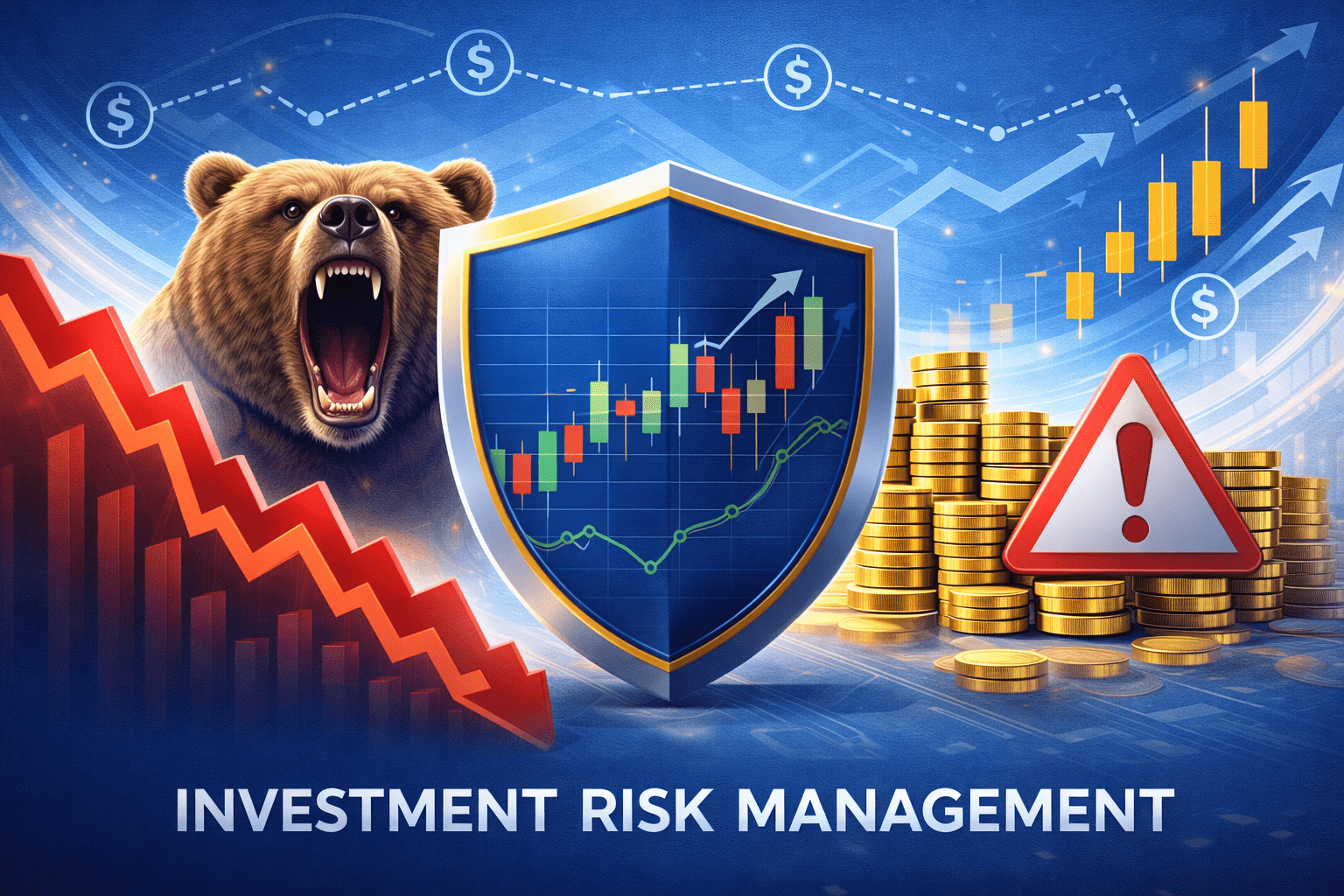
Successful investing is not only about choosing the right assets—it is equally about managing risk intelligently.
Long-term wealth builders understand that protecting capital during downturns is what allows portfolios to grow consistently over decades.
Investment risk management is therefore one of the most important yet least understood pillars of financial success.
This guide explains the practical, real-world strategies investors can use to reduce losses, control volatility, and maintain steady long-term growth.
Why Risk Management Matters More Than Returns
Many beginners focus only on high returns, ignoring the dangers of:
- Market crashes
- Over-concentration in one asset
- Emotional decision-making
- Poor diversification
However, avoiding large losses is often more powerful than chasing high gains.
For example:
- A 50% loss requires a 100% gain just to recover.
- Smaller drawdowns allow faster long-term compounding.
This is why disciplined investors prioritize downside protection first.
The Core Types of Investment Risk
Understanding risk begins with identifying its sources.
1. Market Risk
Overall market declines affecting most assets.
2. Concentration Risk
Too much money in a single stock, sector, or country.
3. Inflation Risk
Purchasing power erosion over time.
4. Behavioral Risk
Emotional reactions such as panic selling or greed buying.
Many of these risks can be reduced using structured portfolio strategies, similar to those discussed in
long-term portfolio rebalancing strategy that protects wealth automatically.
Diversification: The First Line of Defense
Diversification spreads investments across:
- Asset classes
- Industries
- Geographic regions
This reduces the impact of any single failure.
Global diversification strategies have already been shown to protect wealth during crashes, as explained in
global diversification strategies that protect wealth during market crashes.
Key principle:
Never rely on one investment to secure your future.
Asset Allocation Controls Most Portfolio Risk
Research consistently shows that asset allocation drives the majority of long-term returns and risk levels.
A balanced mix may include:
- Stocks for growth
- Bonds for stability
- Cash for liquidity
Strategic allocation methods are detailed in asset allocation strategies that reduce risk and grow wealth long term.
Maintaining this balance is essential for risk control across market cycles.
Rebalancing Prevents Hidden Risk Build-Up
Over time, strong-performing assets grow larger in a portfolio, silently increasing risk.
Periodic rebalancing:
- Restores original allocation
- Locks in gains
- Reduces volatility
Without rebalancing, portfolios may become dangerously overexposed before downturns begin.
Position Sizing Protects Against Catastrophic Loss
Professional investors rarely risk too much on a single idea.
Common guidelines include:
- Limiting one stock to 5–10% of portfolio
- Avoiding heavy leverage
- Gradually entering positions instead of investing all at once
These rules ensure that no single mistake destroys long-term progress.
Managing Risk During Market Volatility
Market volatility is normal, not abnormal.
Smart investors respond by:
- Continuing disciplined investing
- Avoiding panic selling
- Maintaining long-term perspective
Understanding market psychology and investor emotions is critical, as explored in market psychology explained: how investor emotions control market outcomes.
Emotional control is often the difference between success and failure.
The Role of Safe, Low-Cost Investment Vehicles
Low-cost diversified funds reduce:
- Stock-specific risk
- Fees that erode returns
- Complexity in portfolio management
Regulatory investor education resources such as Investor.gov diversification guide explain why diversification is a core protection strategy for long-term investors.
Building a Personal Risk Management Framework
Every investor should define:
- Target asset allocation
- Maximum acceptable loss
- Investment time horizon
- Rebalancing schedule
This transforms investing from emotional guessing into a structured long-term system.
Final Thoughts
Investment success is not determined by how much you gain in good years,
but by how well you protect wealth in bad years.
Risk management provides:
- Stability during volatility
- Confidence to stay invested
- Stronger long-term compounding
Investors who master risk control place themselves on a far more reliable path toward lasting financial independence.