What you will learn: What an index fund is, why 92% of actively managed funds lose to it over 20 years, how the expense ratio is quietly eroding your wealth, the 3-fund portfolio for India, and the Warren Buffett approach adapted for Indian investors — with real numbers and India-specific ETF picks.
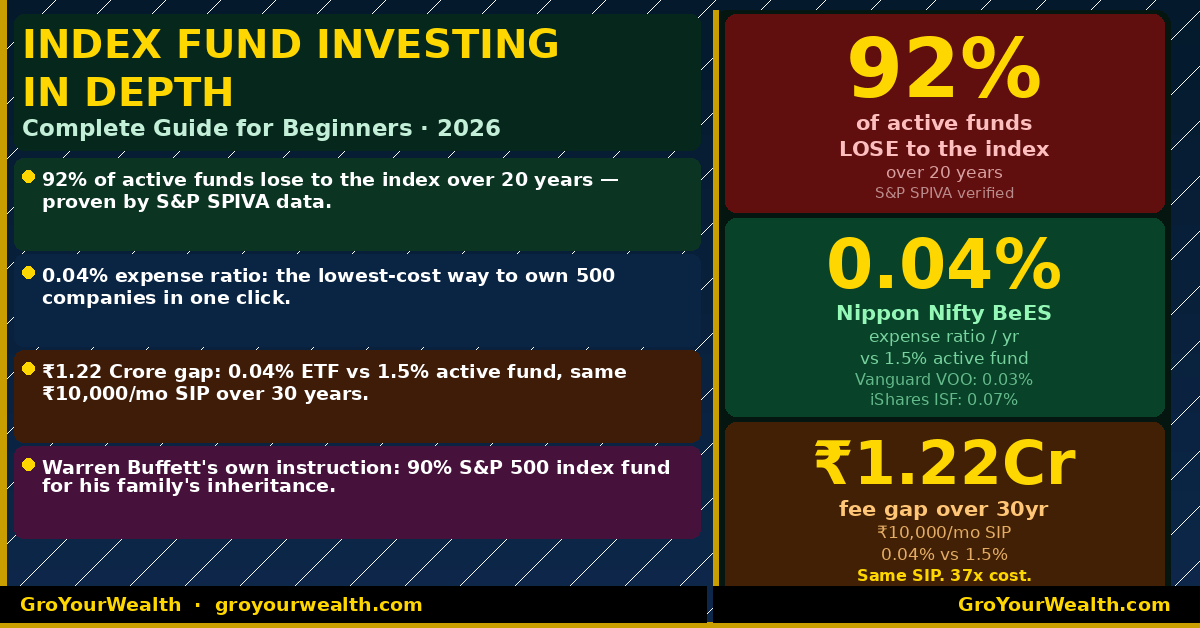
Rs.1.22 Crore — difference between cheapest and most expensive fund over 30 years
━━━━━━━━━━━━━━━━━━━━━━━━━━━━━━━━━━━━━━━━━
1. WHAT IS AN INDEX FUND?
━━━━━━━━━━━━━━━━━━━━━━━━━━━━━━━━━━━━━━━━━
An index fund is a fund that tracks a market index automatically — no stock picking, no fund manager making daily decisions, no human guesswork. It simply buys and holds the exact companies in the index in the same proportions, rebalancing automatically when the index changes.
The Nifty 50 on the National Stock Exchange is a list of the 50 largest Indian companies. When you buy a Nifty 50 ETF, you automatically own a slice of all 50 in one transaction. The S&P 500 covers the 500 largest US companies. FTSE 100 covers the 100 largest UK companies.
Index fund vs ETF: An index ETF is the exchange-traded version of an index fund — it tracks the same index but trades on the NSE or BSE like a regular share. You need a Demat account for an ETF. The underlying returns are essentially identical. This article covers both.
Active investing means paying a fund manager to pick stocks and try to beat the market. Passive investing means buying the market itself through an index fund. This debate has been definitively settled by data from every major market worldwide.
According to S&P Global’s SPIVA report , approximately 92% of large-cap actively managed funds under perform their benchmark index over a 20-year period — across India, the USA, the UK, Australia, and Canada.
COUNTRY BENCHMARK ACTIVE FUNDS BEATEN BY INDEX (20yr)
India Nifty 50 / Nifty 500 ~88% underperform
USA S&P 500 92% underperform
UK FTSE All-Share ~89% underperform
Australia ASX 200 ~80% underperform
Canada S&P/TSX Composite ~86% underperform
Note — Survivorship bias: SPIVA data only counts funds that survived. Funds that performed so poorly they were merged or closed are removed from the record — meaning the real underperformance rate is even higher than published.
━━━━━━━━━━━━━━━━━━━━━━━━━━━━━━━━━━━━━━━━━
3. THE EXPENSE RATIO — THE WEALTH DESTROYER
━━━━━━━━━━━━━━━━━━━━━━━━━━━━━━━━━━━━━━━━━
The expense ratio is the annual fee charged by a fund as a percentage of your total investment. It is deducted automatically every year — you never see it as a separate line item. It simply reduces your returns before they reach you.
You can look up any Indian fund’s expense ratio on Value Research Online or Morningstar India. Always compare the direct plan figure, not the regular plan.
Quick check: Open your mutual fund app. Find the fund name. Does it say “Direct” or “Regular”? If it says Regular, you are paying an extra 0.5%–1% distribution commission every year that goes to the distributor — not to you.
━━━━━━━━━━━━━━━━━━━━━━━━━━━━━━━━━━━━━━━━━
4. WHAT RS.1.22 CRORE IN FEES ACTUALLY LOOKS LIKE
━━━━━━━━━━━━━━━━━━━━━━━━━━━━━━━━━━━━━━━━━
All figures below assume Rs.10,000 per month SIP for 30 years at 12% gross annual return — the Nifty 50’s historical average.
FUND TYPE EXPENSE RATIO FINAL CORPUS (30yr) LOST VS BEST VERDICT
Nippon Nifty BeES ETF 0.04% Rs.3.49 Crore — Best Choice
Broad market index funds track the entire market — Nifty 50, Nifty 500, S&P 500. This is the right starting point for almost all investors. Maximum diversification, minimum cost. Nippon India Nifty BeES (0.04%) and SBI Nifty 50 ETF (0.07%) are the top Indian options. You can track all NSE indices with live data here (nseindia.com/market-data/all-indices).
Sectoral index funds track a single industry — Nifty Bank ETF, Nifty IT ETF, Nifty Pharma ETF. Higher risk and only appropriate once you have a solid broad-market core position.
International index funds give exposure to global markets. The Motilal Oswal S&P 500 ETF (0.50%) and Mirae Asset NYSE FANG+ ETF are widely used. This is important diversification because your salary, your house, and your career are already exposed to the Indian economy.
━━━━━━━━━━━━━━━━━━━━━━━━━━━━━━━━━━━━━━━━━
6. THE 3-FUND PORTFOLIO FOR INDIAN INVESTORS
━━━━━━━━━━━━━━━━━━━━━━━━━━━━━━━━━━━━━━━━━
Inspired by Vanguard (vanguard.com) founder John Bogle’s 3-fund approach, adapted for Indian investors using NSE-listed ETFs:
FUND ALLOCATION BEST INDIA OPTION EXPENSE RATIO
Nifty 50 ETF — Core Indian equity 50% Nippon India Nifty BeES 0.04%
Debt Index ETF — Stability 20% Bharat Bond ETF 0.0005%
Set a monthly SIP in each. Same date. Automate it. Review once a year. Rebalance if any fund drifts more than 5% from its target. That is the complete strategy.
━━━━━━━━━━━━━━━━━━━━━━━━━━━━━━━━━━━━━━━━━
7. PORTFOLIO ALLOCATION BY AGE
━━━━━━━━━━━━━━━━━━━━━━━━━━━━━━━━━━━━━━━━━
Under 35: 80% Nifty 50 ETF, 20% S&P 500 ETF, 0% debt. Maximum compounding runway.
55+: 35% equity ETFs, 65% debt index. Capital preservation priority.
━━━━━━━━━━━━━━━━━━━━━━━━━━━━━━━━━━━━━━━━━
8. WARREN BUFFETT’S PORTFOLIO — INDIA ADAPTATION
━━━━━━━━━━━━━━━━━━━━━━━━━━━━━━━━━━━━━━━━━
Warren Buffett has instructed that 90% of his estate go into a low-cost S&P 500 index fund. For Indian investors, the GroYourWealth adaptation: 60% Nifty 50 ETF + 30% Motilal Oswal S&P 500 ETF + 10% Bharat Bond ETF. Blended expense ratio under 0.35%. No stock picking. No fund manager. Permanent.
Search for Nippon India Nifty BeES on your broker. Start any amount — even Rs.500/month. Enable auto-debit. Set one annual review reminder. The best time to start was 10 years ago. The second best time is today.
━━━━━━━━━━━━━━━━━━━━━━━━━━━━━━━━━━━━━━━━━
10. FREQUENTLY ASKED QUESTIONS
━━━━━━━━━━━━━━━━━━━━━━━━━━━━━━━━━━━━━━━━━
Q: What is the difference between an index fund and an ETF?
An index ETF tracks the same index as an index mutual fund but trades on the NSE or BSE at live prices during market hours. An index mutual fund is priced once per day at NAV. You need a Demat account for ETFs but not for mutual funds. Long-term returns are essentially identical — the ETF edge is its marginally lower expense ratio.
Q: Is the Nifty 50 ETF safe?
All equity investments carry short-term risk. The Nifty 50 has fallen 40–60% during major crashes. Over every 10-year period in its history since 1996, however, the Nifty 50 has delivered positive returns. Held for 15+ years with regular SIP, the historical risk of permanent loss has been very low. Time horizon — not timing — is what matters.
Q: How do I switch from a regular plan to a direct plan?
Log in to MFCentral (mfcentral.com) — India’s official mutual fund transaction platform — using your PAN and Aadhaar OTP. Select the fund and click Switch to Direct Plan. It is free and takes about 5 minutes. The switch may trigger a short-term or long-term capital gains event depending on how long you have held the fund, so check the holding period first.
Q: What is the Bharat Bond ETF?
The Bharat Bond ETF tracks an index of AAA-rated PSU (public sector) bonds — government-backed debt. It has one of the world’s lowest expense ratios at 0.0005% per year, provides stable returns with very low credit risk, and is the recommended debt component for the 3-fund India portfolio.
Q: Can I combine ETFs and mutual funds in the same portfolio?
Yes. Many Indian investors use Nifty ETFs for their core large-cap exposure (for the lowest cost) and direct plan index mutual funds for categories where ETFs are less available or less liquid — such as mid-cap, small-cap, or international. The key principle is the same: minimize expense ratios, maximize diversification, invest consistently.
━━━━━━━━━━━━━━━━━━━━━━━━━━━━━━━━━━━━━━━━━
ABOUT GROYOURWEALTH
━━━━━━━━━━━━━━━━━━━━━━━━━━━━━━━━━━━━━━━━━
Simple, honest financial education for everyday investors in India and worldwide. New videos every day on the GroYourWealth YouTube channel (youtube.com/@GroYourWealth).