How to Calculate Compound Interest Step-by-Step (2026 Guide)

How to Calculate Compound Interest Step-by-Step (2026 Guide)

Compound interest is often described as “interest on interest.”

But very few investors actually know how to calculate it.

Understanding the math behind compounding gives you confidence, clarity, and long-term discipline. Once you see how the numbers grow, investing becomes logical — not emotional.

Let’s break it down step-by-step.

Watch the full visual explanation here:


Step 1: Understand the Compound Interest Formula

The basic formula is:

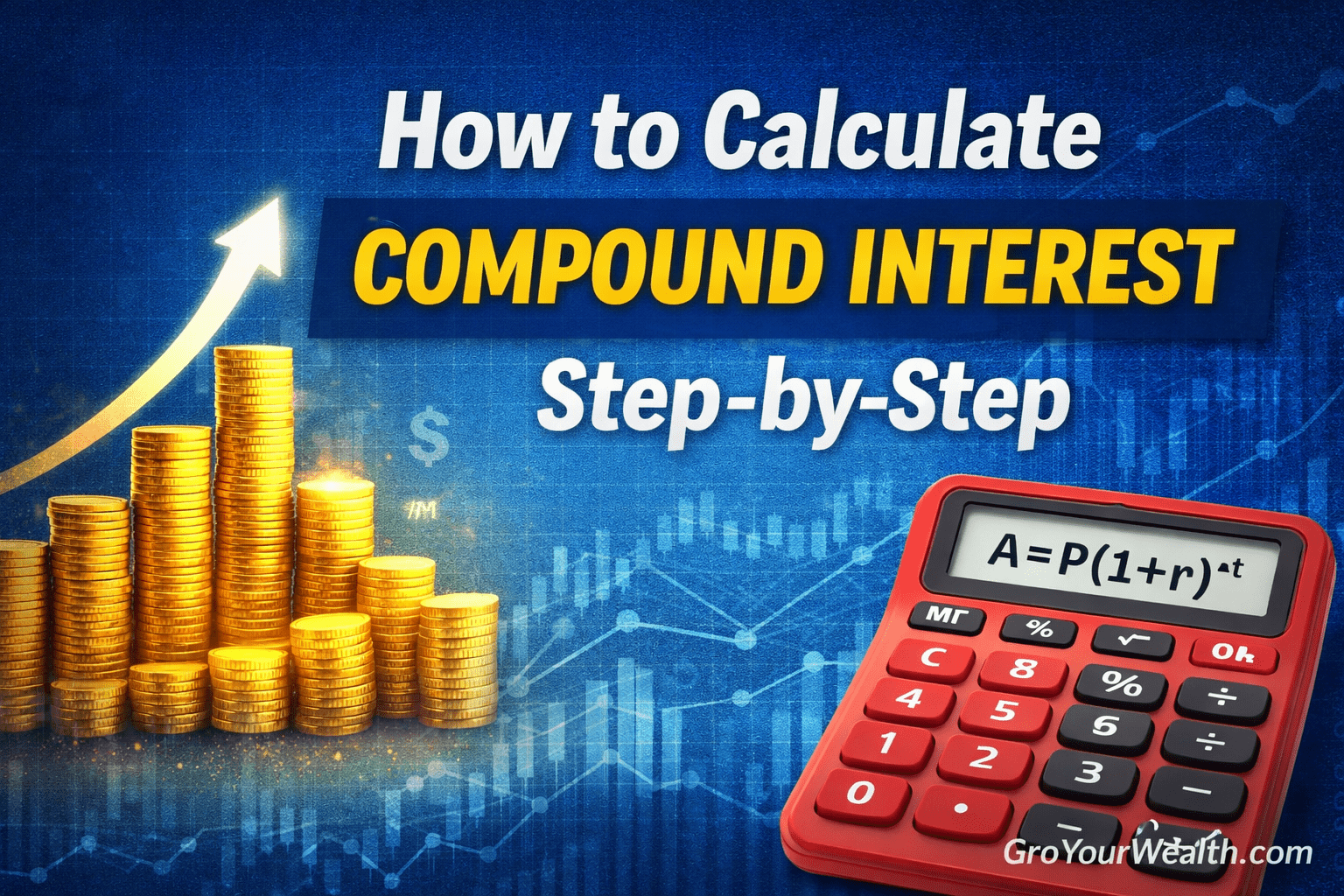
A = P (1 + r)^t

Where:

  • A = Final amount
  • P = Principal (initial investment)
  • r = Annual interest rate (decimal)
  • t = Time in years

Example:

If you invest $10,000 at 8% annually for 10 years:

A = 10,000 (1 + 0.08)^10
A ≈ 21,589

Your money more than doubles.


Step 2: Add Monthly Contributions

Most investors don’t invest once. They invest monthly.

For recurring investments, the formula becomes:

Future Value = P (1 + r)^t + PMT × [((1 + r)^t − 1) / r]

Where:

  • PMT = Monthly contribution

Example:

Invest $500 per month at 8% annually for 20 years.

Your total contributions:
$500 × 12 × 20 = $120,000

But your final value ≈ $294,000+

Nearly $174,000 comes from compounding — not your pocket.

This is the acceleration effect we discussed in our compound comparison guide.


Step 3: Understand Compounding Frequency

Compounding can be:

  • Annually
  • Quarterly
  • Monthly
  • Daily

The more frequent the compounding, the slightly higher the final result.

However, over long time horizons, the biggest driver is time, not frequency.


Step 4: Use the Rule of 72 for Quick Estimates

To estimate how long your money takes to double:

Divide 72 by your annual return rate.

Example:

72 ÷ 9% = 8 years

This is not exact, but very useful for planning.

For accurate projections, you can use the official compound interest calculator provided by Investor.gov:


Step 5: Compare Starting Early vs Starting Late

Investor A:
Starts at 25
Invests $500/month for 30 years

Investor B:
Starts at 35
Invests $500/month for 20 years

Even if both invest consistently, Investor A can end up with nearly double the final amount.

Time multiplies growth.

This is why long-term investing discipline matters more than trying to time the market.


Step 6: What Reduces Compound Growth?

Several mistakes slow compounding:

  • Withdrawing early
  • High investment fees
  • Frequent trading
  • Interrupting contributions
  • Carrying high-interest debt

High-interest debt especially destroys compound potential, which we’ll explore in our next guide.


Step 7: The Psychological Shift

When you understand the math:

You stop chasing quick gains.

You start thinking in decades.

You measure progress in consistency, not excitement.

Compound interest rewards patience, not intensity.


Final Takeaway

Calculating compound interest isn’t just a math exercise.

It changes how you view time.

Even small monthly investments can grow dramatically over 10–20 years.

The formula is simple.

The discipline is the challenge.

But once you understand how compounding works mathematically, long-term investing becomes easier to commit to.

Leave a comment