When you finance a car, you don’t just take on a monthly payment.
You also take on depreciation risk.
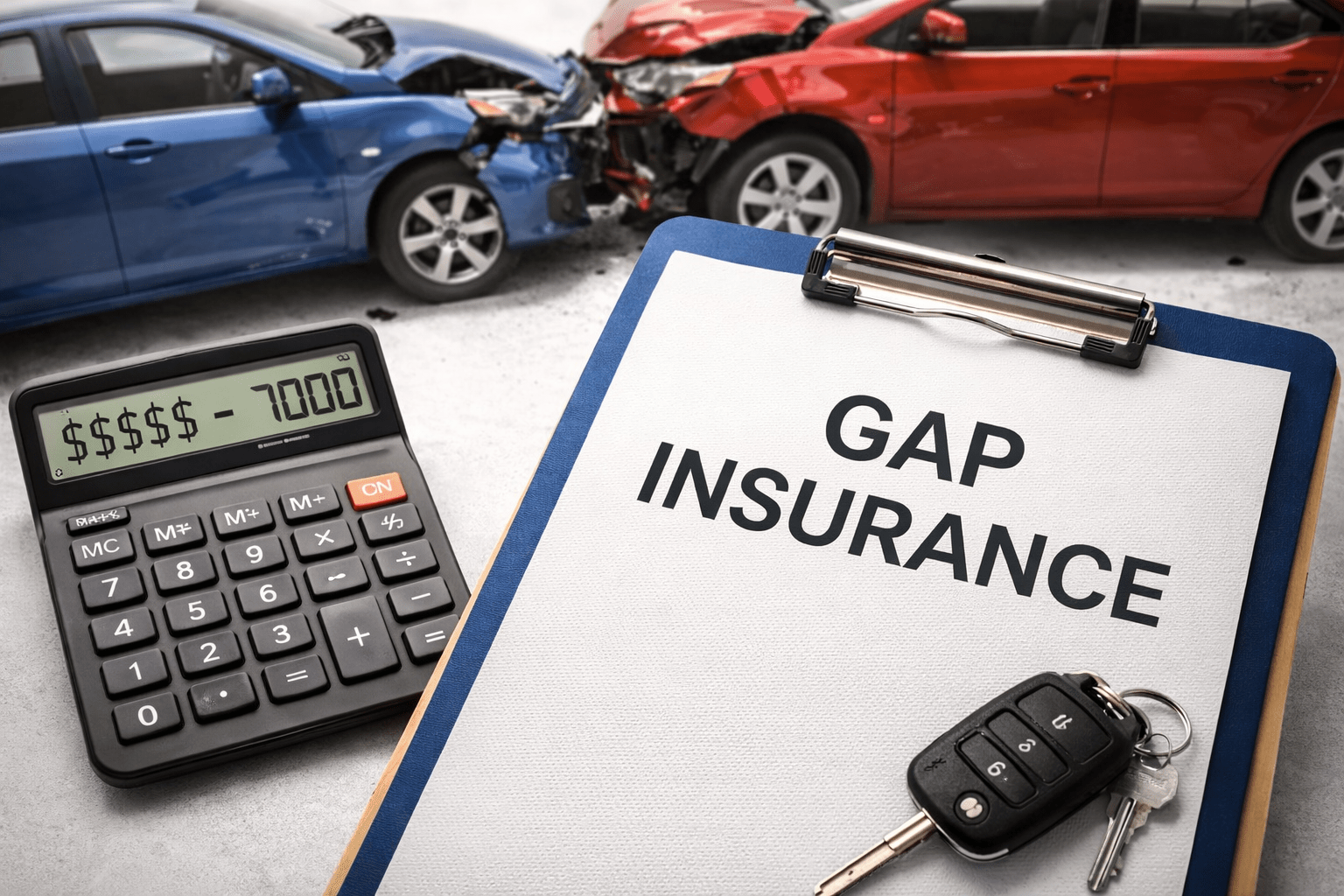
Most new vehicles lose significant value the moment you drive them off the lot. If your car is totaled or stolen early in the loan period, you may owe more on the loan than the vehicle is worth.
That difference is where gap insurance comes in.
Understanding how it works can prevent a serious financial setback.
What Is Gap Insurance?
Gap insurance stands for Guaranteed Asset Protection.
It covers the “gap” between:
• What your car insurance pays after a total loss
• What you still owe on your auto loan or lease
If your car is declared a total loss, your primary auto insurer typically pays the vehicle’s current market value — not the original purchase price.
If you owe more than that value, you are responsible for paying the remaining balance unless you have gap insurance.
Why the Gap Exists
Vehicles depreciate quickly.
For example:
• You buy a car for $30,000
• After one year, its market value drops to $23,000
• You still owe $27,000 on your loan
If the car is totaled, your insurance may pay $23,000.
You are still responsible for the remaining $4,000.
Gap insurance would cover that $4,000 difference (depending on policy terms).
This risk becomes more significant if:
• You made a small down payment
• You chose a long loan term (60–84 months)
• You financed taxes and fees
• You rolled negative equity from a previous loan
When Gap Insurance Makes Sense
Gap insurance is generally useful if:
• Your loan balance exceeds the car’s current value
• You made less than 20% down payment
• You chose a long financing term
• You leased the vehicle (often required)
If you paid cash or made a large down payment, gap insurance may not be necessary.

Understanding how insurance deductibles and coverage limits work together is also important. Review How Insurance Deductibles, Premiums, and Coverage Limits Actually Work Together to see how protection layers function in real life.
When Gap Insurance Is Not Necessary
You likely don’t need gap insurance if:
• You owe less than the vehicle’s value
• You made a substantial down payment
• Your loan term is short
• You own the vehicle outright
Over time, as you pay down your loan, the gap usually shrinks.
At that point, continuing to pay for gap coverage may not make financial sense.
How Much Does Gap Insurance Cost?
Cost varies depending on where you purchase it.
You can buy gap insurance:
• Through your car dealership
• Through your auto insurer
• Through a financial institution
Dealerships often charge more because they bundle it into your loan.
Auto insurers typically offer lower-cost add-ons.
Before purchasing, compare total cost over the loan term.
Where to Buy Gap Insurance
You have three main options:
1. Dealership
Convenient but usually the most expensive.
2. Auto Insurance Company
Often cheaper and easier to cancel when no longer needed.
3. Bank or Credit Union
Sometimes offers competitive pricing.
Always read the policy terms carefully.
According to global financial consumer protection guidance from the World Bank, borrowers should carefully evaluate loan structures and additional financial products before committing to long-term obligations.
Gap insurance is one of those add-ons that should be evaluated, not automatically accepted.
Does Gap Insurance Cover Everything?
No.
Gap insurance typically does not cover:
• Deductibles (unless specified)
• Late payments
• Extended warranties
• Mechanical issues
• Down payments
It only covers the remaining loan balance after your insurer pays the market value of a totaled vehicle.
Should You Cancel Gap Insurance Later?
Yes — if the gap disappears.
As your loan balance decreases and your vehicle value stabilizes, the risk of negative equity reduces.
Once you owe less than the car’s value, gap insurance is no longer necessary.
Regularly reviewing your financial protection strategy is important. You can also explore Essential Insurance Policies Everyone Needs for Total Financial Security to understand how different policies fit into a broader wealth protection framework.
The Bigger Financial Lesson
Gap insurance isn’t about fear.
It’s about managing downside risk.
Large financial setbacks often come from unexpected events — accidents, theft, or disasters.
Proper risk management protects long-term wealth.
Just as investors manage portfolio risk, borrowers should manage liability risk.
Insurance, when used strategically, reduces volatility in your financial life.
Final Thoughts
Gap insurance can be a smart decision — but only in the right situation.
If you:
• Have little equity in your vehicle
• Took a long loan term
• Made a small down payment
Gap insurance may protect you from a painful financial surprise.
But if you already have equity, it may be unnecessary.
Like all financial tools, the key is understanding when it adds value — and when it doesn’t.